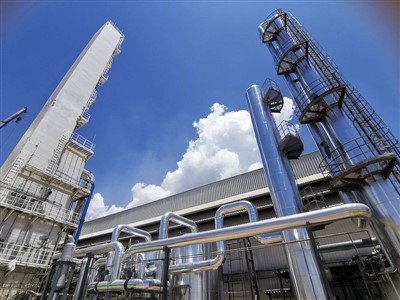
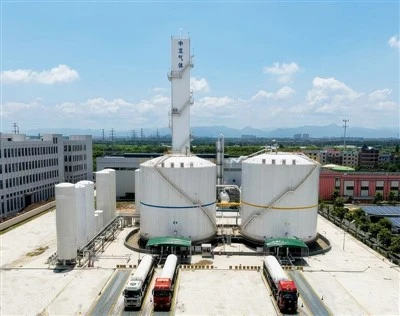
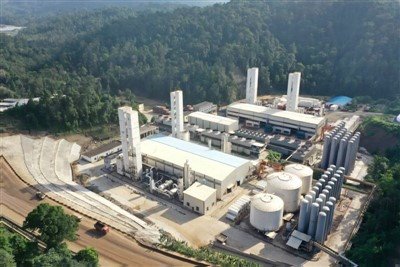
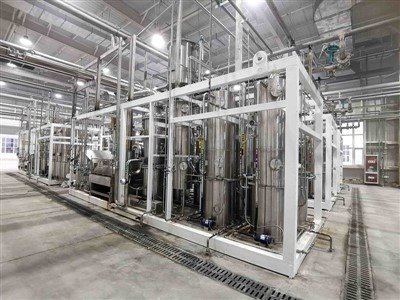
Natural gas liquefaction plants (LNG) follow the thermodynamic phase transition laws. When the temperature is below the critical point (methane: -82.6℃), the transition from gas phase to liquid phase can be achieved through pressurization or cooling. At atmospheric pressure, cooling to -162℃ is required for liquefaction, while at a pressure of 4.5 MPa, cooling to only -84℃ is sufficient. This process requires overcoming the kinetic energy of gas molecules, achieving a reduction in internal energy through compressor work and heat transfer in heat exchangers.
Mixed Refrigerant Process: This process uses a mixed working fluid of nitrogen, methane, and ethane to achieve a low temperature of -160℃ through single-stage compression. Equipment investment is reduced by 30%, but energy consumption increases by 20%.
Cascaded Refrigeration Process: This process uses three stages of cooling with propane (-40℃), ethylene (-100℃), and methane (-160℃) for stepwise temperature reduction. It has the lowest energy consumption but the highest equipment complexity.
Expansion Refrigeration Process: This process is suitable for small-scale plants. Natural gas is expanded through a turbine to an absolute pressure of 0.1-1 MPa, utilizing its own pressure drop to generate cooling. Energy consumption is 35% higher than the mixed refrigerant process.