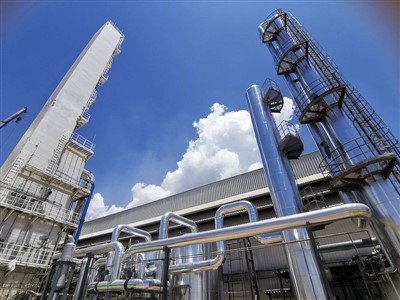
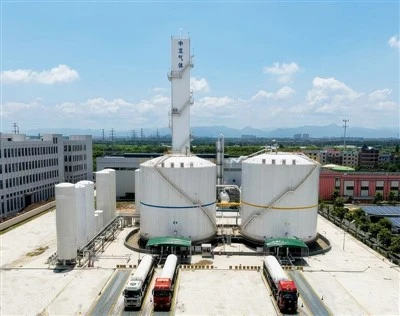
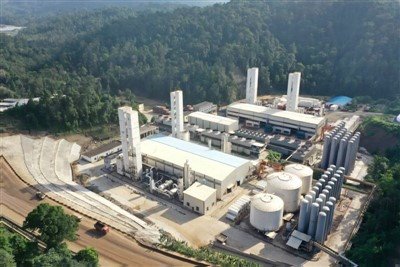
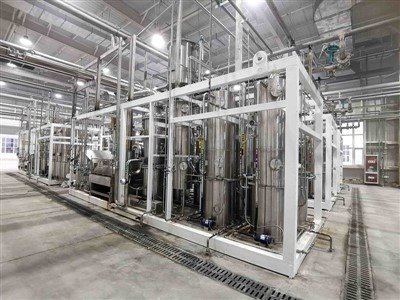
Liquefied natural gas (LNG) plants have become the main or transitional gas source for cities that cannot be supplied with natural gas via pipelines, and also serve as a supplementary or peak-shaving gas source for many cities that do use pipeline natural gas. An LNG plant is a satellite station for receiving, storing, and distributing LNG, and also serves as an intermediate transfer point for towns or gas companies to move LNG from producers to users. Thanks to their short construction cycle and ability to quickly meet the needs of the gas market, LNG plants have gradually been built in many economically developed, energy-scarce small and medium-sized cities along my country's southeastern coast, becoming permanent gas supply facilities or transitional gas supply facilities before pipeline natural gas arrives.
LNG is transported to the regasification station by tank trucks. An LNG unloading booster increases the pressure inside the tank truck, transferring the LNG to the cryogenic storage tank. When discharging from the LNG storage tank, the tank's self-pressurization system first increases the tank pressure. Then, the liquid phase outlet valve is opened, and the LNG is sent to the vaporizer via the pressure difference. After pressure regulation, metering, and odorization, the gas is sent into the municipal gas pipeline network. When the ambient temperature is low and the natural gas temperature at the outlet of the ambient air vaporizer is below 5℃, a water bath heater needs to be connected in series at the outlet of the ambient air vaporizer to heat the vaporized natural gas.