How Humidity Impairs Liquid Air Separation Unit (Liquid ASU) Performance & Practical Mitigation Solutions
Meta Description: Explore how ambient humidity damages Liquid Air Separation Unit operation, real‑world failure cases, proven mitigation strategies, and expert tips for high‑humidity coastal & tropical industrial projects.
Liquid Air Separation Units (Liquid ASU) serve as core cryogenic facilities that separate atmospheric feed‑air into high‑purity liquid oxygen, liquid nitrogen, and liquid argon through low‑temperature distillation processes. While most engineering evaluations focus on capacity, power consumption, and product purity requirements, ambient humidity remains a frequently overlooked operational risk factor that can degrade equipment efficiency, trigger unplanned shutdowns, shorten service lifespan, and raise overall operational expenditure for industrial gas plants. For plant operators, EPC contractors, and overseas procurement teams, understanding humidity‑related failure modes and adopting targeted countermeasures is critical to secure stable long‑term plant output, especially for facilities deployed in coastal zones, tropical regions, and high‑moisture climate zones.
Liquid ASU draws raw feed‑air directly from the surrounding atmosphere, which inherently carries water vapor. Once humid air enters the cryogenic workflow, moisture creates cascading negative impacts across core process equipment starting from the air intake stage.
First, moisture‑induced icing inside plate‑fin heat exchangers represents the most common severe hazard. As incoming air rapidly cools down to cryogenic temperatures within heat exchangers, water vapor condenses and solidifies into ice layers on heat‑transfer surfaces. Ice accumulation shrinks the effective heat‑exchange area, weakens heat‑transfer efficiency, and forces compressors and cooling systems to consume extra power to reach target cryogenic temperatures, driving up specific energy consumption of the whole plant. With prolonged operation, thick ice layers may scratch, deform or crack heat‑exchanger channels, generating hidden leakage risks for the whole cold box assembly.
Second, residual moisture contaminates distillation column working conditions. Water acts as a non‑condensable impurity inside distillation towers, disturbing established vapor‑liquid equilibrium parameters for oxygen‑nitrogen‑argon fractionation. Consequently, finished gas and liquid products contain excess moisture impurities. For downstream semiconductor manufacturing, pharmaceutical processing, and precision metallurgical production, gas products with elevated moisture content fail to meet strict high‑purity specifications and become unqualified for core production workflows.
Third, high humidity imposes extra mechanical burden on air compressors. Water vapor mixed in feed‑air increases compression load. Water droplets also accelerate abrasion, rusting and corrosion against pistons, inlet‑outlet valves, and bearing assemblies. Accelerated component wear shortens compressor service cycles, increases spare‑part replacement frequency, and brings more unscheduled maintenance events.
Two practical field case studies further illustrate the tangible business losses brought by uncontrolled humidity. One Liquid ASU project built within a coastal high‑humidity area encountered gradual heat‑exchanger efficiency drop only several months after commissioning. Uneven cooling caused by internal ice formation disturbed distillation column separation performance; oxygen and nitrogen purity drifted below contracted industrial standards. Operators had to implement repeated plant shutdowns for heat‑exchanger defrosting and tower internal cleaning, resulting in massive liquid‑gas production loss and heavy revenue damage. Another Liquid ASU operating under tropical climate suffered recurring compressor breakdowns. Atmospheric moisture triggered internal corrosion and abnormal component wear. Elevated maintenance expenses together with unplanned downtime interrupted stable liquid‑gas supply for local industrial end‑users.
To offset humidity‑derived risks, plant owners shall deploy a complete three‑dimensional mitigation framework: intake pre‑treatment, full‑process parameter monitoring, and standardized periodic inspection & maintenance.
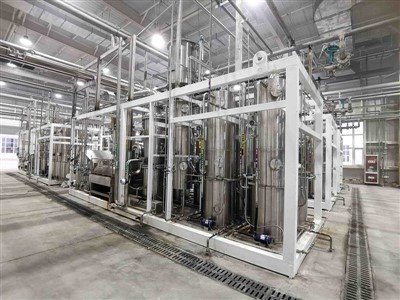
Air intake pre‑treatment acts as the first defensive barrier. Combined air filtration and desiccant dryer systems remove particulate contaminants and strip water vapor from incoming feed‑air before cryogenic processing starts. Well‑configured pre‑treatment equipment largely prevents icing, tower contamination and compressor corrosion in downstream units.
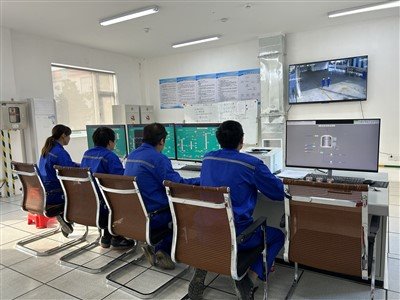
Continuous real‑time process monitoring delivers early warning capability. Advanced automation control platforms track humidity, temperature, and pressure data at multiple key nodes across air intake, compression, pre‑treatment, heat‑exchanger and distillation sections. Operators receive real‑time alerts when humidity thresholds are exceeded, allowing proactive adjustment for dryer working loads or heat‑exchanger operating setpoints before equipment damage occurs.
Routine inspection and systematic maintenance are irreplaceable for long‑term reliability in humid environments. Maintenance schedules should cover heat‑exchanger internal checking, distillation column internals cleaning, and compressor component inspection. Engineers must watch for early warning signs including trace ice build‑up, surface corrosion, and abnormal vibration. Plant managers can refer to professional guidance documents covering operation‑and‑maintenance‑of‑asu and inspection‑and‑repair‑of‑asu for standardized work procedures.
Long‑term cumulative humidity damage cannot be underestimated. Apart from higher power bills and frequent repair work, persistent moisture corrosion undermines structural integrity of pressure‑bearing and cryogenic components, leading to premature equipment retirement and large‑capital replacement costs, as well as unpredictable production interruptions. Conversely, systematic humidity management enables Liquid ASU assets to sustain optimal energy‑saving performance and extend service life for decades.
Humidity tolerance requirements also shift across different Liquid ASU application scenarios. For gas‑supply stations that demand uninterrupted high‑purity gas delivery, even minor moisture contamination may compromise downstream chemical production processes. For cryogenic air‑separation plants focusing on ultra‑accurate component fractionation, subtle humidity fluctuation can break the precise thermal balance inside cold boxes and reduce separation efficiency and product grade.
Source Your Robust Liquid ASU Solution From HANTURBO Technology (Zhejiang) Co., LTD.
For global buyers searching for dependable Liquid Air Separation Unit and cryogenic gas‑processing equipment adapted to challenging high‑humidity operating environments, HANTURBO Technology (Zhejiang) Co., LTD. delivers integrated end‑to‑end solutions from design, manufacturing, factory assembly, site installation, commissioning to full‑lifecycle after‑sales maintenance. Founded in 2012 and headquartered in Huzhou, Zhejiang Province, China, our manufacturing base sits approximately 200 km away from Shanghai Port and Ningbo‑Zhoushan Port, ensuring convenient logistics support for cross‑border equipment delivery to overseas markets covering Indonesia, Turkey, Mexico, India, Iran, Zimbabwe, Pakistan, Vietnam and other regions.
We maintain long‑term technical cooperation with Zhejiang University (top‑tier research university in China). The joint Specialty Gas & Equipment Joint Research Center empowers our core cryogenic air‑separation technology with advantages of high argon recovery ratio and low energy consumption, while supporting customized pre‑treatment and intelligent monitoring modules specially optimized for high‑humidity site conditions. Our company holds complete qualifications including ISO 9001 quality management, ISO 14001 environmental management, ISO 45001 occupational health & safety management systems certificates, special‑equipment manufacturing licenses, AAA enterprise credit rating, plus multiple software copyrights and utility‑model patents covering air‑separation control systems and energy‑saving process optimization.
Our product portfolio covers full‑series Liquid ASU, cryogenic air‑separation plants, specialty‑gas purification systems, natural gas liquefaction facilities, CO₂ liquefaction equipment and cryogenic liquid storage tanks. Our experienced engineering team possesses rich project experience deploying Liquid ASU equipment across diverse climatic zones including coastal humid and tropical territories. We can configure matching air intake pre‑treatment packages, real‑time humidity monitoring systems and tailored maintenance guidance for your local climate conditions. Whether you are launching a brand‑new liquid‑gas production project or planning technical retrofits for existing Liquid ASU units to improve humidity‑resistance performance, HANTURBO provides custom‑engineered solutions to stabilize plant output, cut energy loss and minimize downtime risks. Contact our international sales team to discuss your Liquid ASU project requirements.