Air Separation Plant Reconstruction: A Technical Feasibility Study Guide
For plant managers and engineering leads across steel, chemical processing, pharmaceuticals, and refining, one of the most common questions we hear is: Is it technically feasible to rebuild our air separation plant instead of tearing it down and starting over? After 15 years of executing air separation plant reconstruction projects, we can tell you the answer is almost never a simple yes or no. It is a layered, data-driven process that balances your current operational needs, regulatory constraints, and long-term goals-while avoiding the unnecessary capital cost of full replacement. This guide walks through the core technical feasibility studies we run for every air separation plant rebuild, using real-world examples from projects completed over the last decade.
Why Reconstruction Often Beats Full Replacement
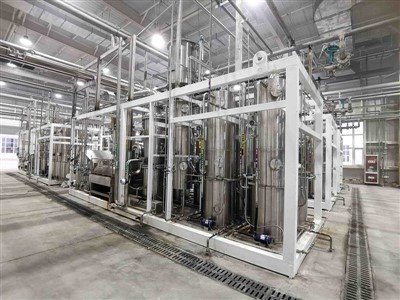
A modern air separation plant-whether a large-scale cryogenic air separator plant for nitrogen or oxygen production or a compact liquid air separation unit for on-demand industrial gas-is a complex system of distillation columns, heat exchangers, compressors, and process control equipment. Older plants, even those that are 20–30 years old, frequently retain functional core components such as distillation columns and piping that can be refurbished rather than replaced. The alternative-full replacement-can take 18–24 months to commission, whereas a well-planned reconstruction can often be completed in 6–12 months with significantly lower upfront capital expenditure. Before any work begins, however, a series of feasibility studies must confirm that a rebuild is not just cost-effective but technically viable.
Study 1: The As-Is Equipment Audit
You cannot plan a reconstruction without knowing exactly what you are working with. The audit starts by mapping every key component of the existing plant: the main air compressor (MAC), the pre-treatment system (which removes water, CO₂, and hydrocarbons from incoming air), the cold box housing the distillation columns, the expansion turbine, and the process control system. Each component is then performance-tested: Does the MAC still deliver the required pressure and flow rate? Are the heat exchangers fouled beyond repair, or can they be chemically cleaned and re-tubed? How much wear is present in the expansion turbine blades, and what is their remaining lifespan?
Last year, we audited a 22-year-old air separation plant at a mid-sized Midwest steel mill producing 150 tons of oxygen per day. The mill's original plan was full replacement at $12 million and 18 months. Our audit found the core cold box, distillation columns, and main compressor still operating at 85% of original efficiency with another 10–15 years of usable life; only the pre-treatment system and process control skid were outdated. The audit confirmed that 70% of the plant's critical, high-cost components could be retained-cutting project cost by 60% and shortening the timeline to 8 months. Without this deep dive, we would have recommended a solution that was neither technically feasible nor economically smart.
Study 2: Process Performance Simulation
Gas demand changes over time: a chemical plant may add a reactor requiring 20% more nitrogen, or a food and beverage facility may shift from gaseous CO₂ to liquid CO₂ for storage. Using Aspen HYSYS or similar process modeling software, we test two scenarios: can the modified existing plant meet current gas purity and flow requirements, and can it accommodate projected demand growth over the next 10 years?
This is also where regulatory and safety standards come in. Many regions now require stricter emissions limits for volatile organic compounds (VOCs) and upgraded safety interlocks for pressure relief and leak detection. In one project, a pharmaceutical client wanted to add liquid oxygen production to an existing gaseous-oxygen air separation plant. Our simulation showed the existing cold box's heat load could not support liquid production at their required rate of 50 tons per month. Instead of a full rebuild, we recommended a modified expansion turbine and a small auxiliary distillation column-a solution that met their output target and passed regulatory inspection.
Study 3: Cold Box Integrity Assessment
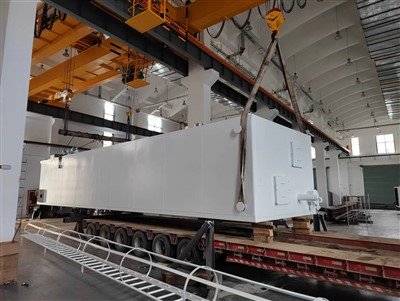
The cold box is the heart of any cryogenic air separation plant: an insulated structure housing distillation columns that operate at −180 °C to −196 °C. Older cold boxes are often made of carbon steel, which can suffer from cryogenic embrittlement over time, and degraded insulation reduces thermal efficiency. We work with third-party non-destructive testing (NDT) specialists to run ultrasonic testing (UT) on column walls for corrosion or cracks, vacuum testing of the insulation jacket (a loss of vacuum is one of the most common causes of cold box failure), and pressure testing of the distillation columns.
Three years ago, a refinery client came to us with a failing cold box causing frequent unplanned shutdowns. Full replacement would have cost $3 million. NDT revealed the columns themselves were in excellent condition-no cracks, minimal corrosion-but a small leak in the outer insulation jacket was reducing efficiency by 12%. We also found the internal piping could be refurbished with a corrosion-resistant lining, adding another 15 years of life. The final repair-and-upgrade package cost $1.2 million-a 60% saving-while keeping the core components that were already functional.
Study 4: New/Old Component Compatibility
Component compatibility is one of the most overlooked technical risks in air separation plant rebuilds. If you upgrade to a newer, more efficient adsorption pre-treatment system, will it integrate with the existing main air compressor's control system? If you add a new process control system, will it communicate with the old expansion turbine's sensors, or will those have to be replaced too? A poor fit causes inefficiency, unplanned downtime, and even safety hazards.
Last year, a food processing client attempted a partial rebuild independently, upgrading their gaseous nitrogen system without checking compatibility with their old cold box. The new nitrogen compressor was 10% larger than the original, and the control system could not adjust to the cold box's pressure fluctuations-resulting in two unplanned shutdowns in three months. When we were called in, our first step was a component compatibility study: we mapped every signal, pressure rating, and control protocol between old and new parts, adjusted the control system, and replaced just two small sensors to resolve the issue. This study is non-negotiable for any reconstruction.
Study 5: Space and Logistics Constraints
Reconstruction happens in a live facility, often while the plant continues operating to protect your core production. A space assessment confirms whether large equipment-such as a new pre-treatment skid or a modified cold box section-can be brought in, or whether modular components are required for tight spaces. Shutdown timelines are planned in coordination with your operational team, ideally scheduled during plant turnarounds or periods of low demand.
One steel mill client had their air separation plant located adjacent to a blast furnace, with almost no extra space around the cold box. The 20-foot pre-treatment skid we needed to install could not fit through the existing access door. Our feasibility study proposed a modular pre-treatment system split into three smaller sections that could be moved through the door and assembled on site-saving the client from removing part of the building structure, which would have added $2 million to the rebuild.
Study 6: Long-Term Operation and Maintenance (O&M) Feasibility
Reconstruction is not just about installing new parts; it is about ensuring the plant remains easy to operate and maintain for your team. This means training operators on the modified control system, providing clear documentation for new components, and designing the rebuild to reduce unplanned maintenance. A simple but high-value recommendation is adding remote monitoring sensors, so your team can track performance in real time and catch small issues before they become shutdowns.

The Outcome: A Data-Backed Decision
The goal of every reconstruction feasibility study is a clear, evidence-based answer: yes, this is technically feasible, with a breakdown of cost, timeline, and expected performance improvements-or no, and here is why full replacement or a partial rebuild is the better option. Over the last 10 years, 80% of the projects we have assessed proved technically feasible for reconstruction, largely because we prioritize retaining the core, high-value components that many suppliers would replace by default.
Air Separation Plant Reconstruction FAQ
Is it cheaper to rebuild or replace an air separation plant? In most cases, yes. Reconstruction typically completes in 6–12 months versus 18–24 months for full replacement, and retaining functional core components can reduce project cost by up to 60%, as in our steel mill example.
How long does an air separation plant last? Core components such as cold boxes and distillation columns can serve 25+ years with proper maintenance and refurbishment. Audits of 20–30-year-old plants routinely find 10–15 years of remaining life in critical equipment.
What is a cold box in an air separation plant? It is the insulated structure housing the distillation columns that operate at cryogenic temperatures (−180 °C to −196 °C). Its structural and thermal integrity is verified through NDT testing before any reconstruction proceeds.
Can an existing plant be upgraded for liquid oxygen production? Often yes. Process simulation determines whether the cold box heat load supports liquid production; if not, a modified expansion turbine and auxiliary distillation column can often close the gap without a full rebuild.
What does an air separation plant feasibility study include? An as-is equipment audit, process performance simulation, cold box integrity assessment, new/old component compatibility review, space and logistics planning, and long-term O&M planning.
Conclusion
If your team is evaluating whether to rebuild your air separation plant, there is no substitute for a tailored feasibility study that accounts for your specific equipment, demand, and operational needs. The right assessment separates a cost-saving reconstruction from an expensive mistake-and it starts with data, not assumptions.