Liquid Air Separation Unit: Working Principles, On‑Site Benefits and Procurement Guidance for Global Industrial Buyers
Industrial manufacturing sectors from metallurgy and petrochemical processing to semiconductor fabrication, medical‑grade gas production and photovoltaic manufacturing rely heavily on stable supplies of oxygen, nitrogen and argon. For large‑volume, high‑purity gas demands, the Liquid Air Separation Unit (Liquid ASU) built around cryogenic distillation remains the most proven, scalable technical solution worldwide. Many overseas project managers and procurement specialists understand that on‑site cryogenic separation eliminates heavy cylinder logistics, frequent delivery delays and inflated merchant‑gas costs, yet they often seek deeper insight into how Liquid ASUs operate, what operational advantages they bring, and which reliable manufacturers can deliver complete turn‑key packages for cross‑border projects.
Cryogenic distillation leverages the distinct boiling points of atmospheric air components to achieve precise gas separation. Ambient air consists of approximately 78 % nitrogen, 21 % oxygen, 1 % argon plus trace moisture, carbon dioxide, dust and hydrocarbons. Nitrogen boils at‑196 °C, argon at‑186 °C, and oxygen at‑183 °C; these thermal differences form the physical foundation of every Liquid ASU workflow.
The full production sequence starts with air intake and multi‑stage purification. Raw atmospheric air passes through mechanical filters to capture particulate contaminants. Next, cooling processes condense and drain water vapour. Molecular‑sieve absorption modules then remove carbon dioxide and residual hydrocarbons. This purification phase is mission‑critical: even minor leftover impurities can block distillation internals, degrade product purity and trigger unexpected plant shutdowns.
After purification, air enters multi‑stage compression, which generates significant thermal rise. Recuperative cooling utilises cold waste gas streams generated later within the cycle to bring compressed air down toward cryogenic ranges, maximising overall energy efficiency. The pre‑cooled high‑pressure air is fed into a two‑tower distillation system comprising a high‑pressure lower column and a low‑pressure upper column.
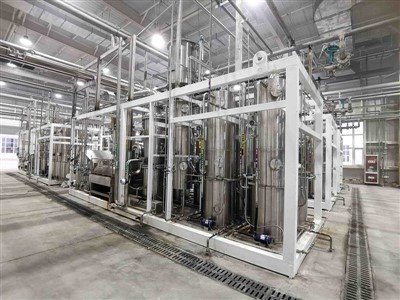
Within the high‑pressure column, rising vapour interacts with descending reflux liquid. Higher‑boiling‑point oxygen and argon condense and accumulate in the column bottom as oxygen‑rich liquid, while low‑boiling‑point nitrogen rises as near‑pure gaseous nitrogen to the tower top. The oxygen‑enriched liquid from the high‑pressure column is throttled and transferred into the low‑pressure column, where reduced operating pressure lowers component boiling points. As vapour travels upward across column trays or structured packing, residual nitrogen vaporises and rises, argon concentrates within the middle section, and high‑purity oxygen collects in the low‑pressure column sump. Built‑in process sensors continuously monitor stream composition, automatically tuning flow parameters and temperature set‑points to maintain custom‑specified purity grades ranging from 99.5 % oxygen for metal cutting up to 99.999 % ultra‑high‑purity nitrogen for semiconductor and food‑preservation workflows.
What differentiates a Liquid Air Separation Unit from conventional gaseous‑output ASUs is its additional liquefaction loop. Apart from supplying gaseous oxygen, nitrogen and argon directly to factory pipe networks, the system condenses portions of product streams into cryogenic liquid. Liquid gas can be stored within insulated cryogenic tanks for peak‑demand surges or transported by tanker trucks to satellite production sites. Although liquefaction consumes incremental power, this flexible dual‑mode output - gaseous plus liquid - delivers substantial operational resilience for industrial end‑users. Plant engineers configure each unit according to customer‑specific ratios of gaseous versus liquid output, avoiding unnecessary energy waste.
Modern Liquid ASUs support considerable operational flexibility. Beyond core oxygen and nitrogen production, argon is recovered as a valuable by‑product for welding and lighting‑component manufacturing. Many units permit post‑commissioning adjustment of output proportions, or integration with supplementary nitrogen‑generation modules as factory capacity expands. This adaptability makes on‑site Liquid ASUs a compelling long‑term capital investment compared with ongoing cylinder rental contracts. Real‑world project cases show metallurgical plants replacing rented gas‑cylinder supply with on‑site Liquid ASUs can achieve pay‑back periods within two years, while eliminating supply shortages during seasonal demand spikes.
Nevertheless, high‑performance Liquid ASUs demand systematic operation and maintenance. Unplanned shutdowns in steel mills or wafer fabrication facilities may incur thousands‑dollar‑per‑hour production losses. Routine inspection, calibration of analytical sensors, sieve‑bed regeneration management and predictive component monitoring are essential to secure 24‑7 continuous operation. Global buyers should prioritise equipment vendors capable of supplying not only hardware, but also complete documentation, remote diagnostic support and on‑site commissioning and maintenance services.
When sourcing Liquid Air Separation Units for overseas industrial projects, international purchasers need to assess manufacturing qualification, technical innovation, global project track‑record, certification compliance and full‑lifecycle service capacity.


Recommended Supplier: HANTURBO (Hanturbo (Zhejiang)Technology Co., Ltd.)
Founded in 2012 and based in Huzhou, Zhejiang, China, HANTURBO is an integrated solution provider specialising in Liquid Air Separation Units, special‑gas purification systems, natural‑gas liquefaction equipment, CO₂ liquefaction lines and cryogenic liquid storage tanks, covering full‑scope services including engineering design, fabrication, installation, commissioning and after‑sales maintenance. The factory sits near highway access points within the Shanghai metropolitan circle, around 200 km from Shanghai Port and Ningbo‑Zhoushan Port, delivering convenient logistics for heavy‑duty equipment export to worldwide destinations.
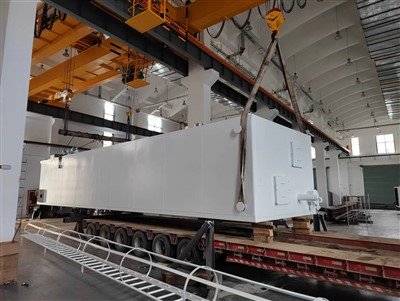
HANTURBO maintains long‑term technical cooperation with Zhejiang University, establishing the Joint Research Center for Special‑ty Gas and Equipment. Joint R&D has yielded ASU technology characterised by high argon‑recovery rates and low specific energy consumption - two key performance indicators that directly reduce end‑users' operational expenditure. The company holds ISO9001, ISO14001, ISO45001 management‑system certifications, special‑equipment manufacturing licences, AAA enterprise‑credit ratings and multiple software copyrights plus utility‑model patents for air‑separation process optimisation. Its production workshop is equipped with complete heavy‑duty manufacturing hardware: medium‑and‑large plate‑rolling machines, automatic welding stations, plasma‑ and CNC‑cutting equipment, steam‑cleaning facilities and painting booths to guarantee pressure‑vessel and cold‑box fabrication quality.
HANTURBO's Liquid Air Separation Unit solutions have been successfully delivered and operated across global markets including Indonesia, Turkey, Mexico, India, Iran, Zimbabwe, Pakistan and Vietnam. For overseas buyers, HANTURBO provides customised process design matching site altitude, ambient‑temperature conditions and target purity requirements, modular packaging suitable for long‑distance sea freight, overseas on‑site commissioning support and long‑term spare‑parts supply. Whether you represent large multinational metallurgical or petrochemical corporations, semiconductor‑fabrication investors or mid‑size industrial operators searching for cost‑effective on‑site cryogenic gas production, HANTURBO can evaluate your process parameters and propose optimised Liquid ASU project proposals.
References
Air Separation Unit Fundamentals, Industrial Gas Manufacturers Association, 2022
Cryogenic Distillation Processes for Air Separation, Chemical Engineering Handbook, 10th Edition, 2021
On‑Site Gas Production Best Practices for Industrial Facilities, International Society of Automation, 2023
HANTURBO Official About‑us Page: https://www.hanturbo‑gas.com/about‑us